Una, grande y libre
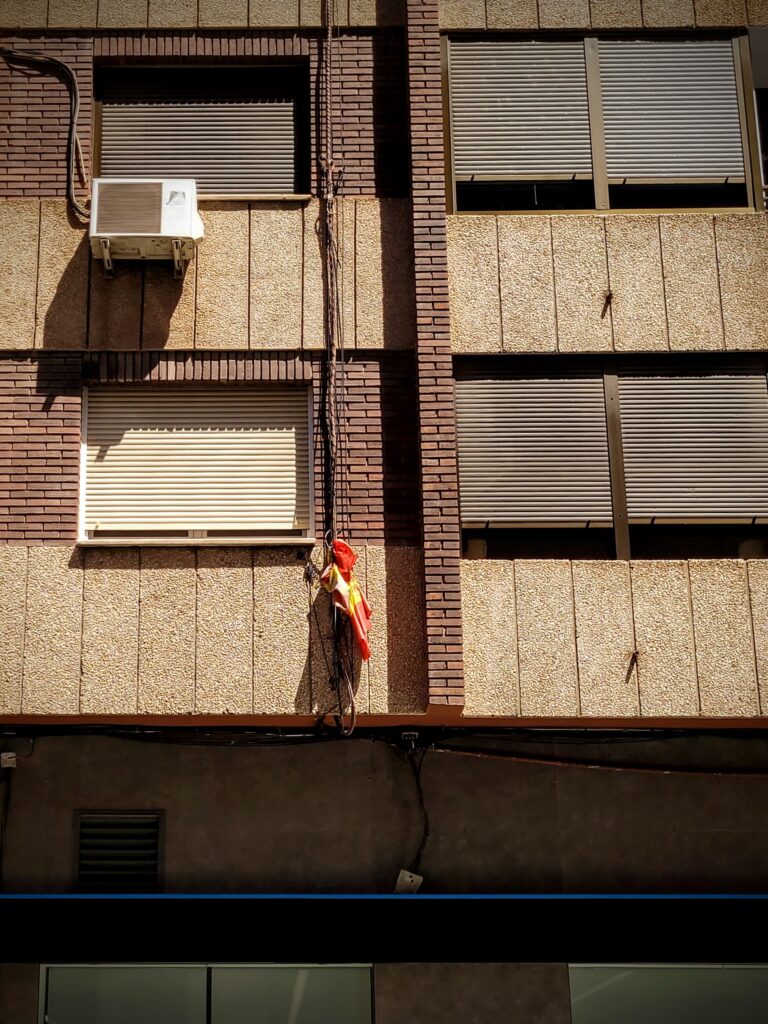
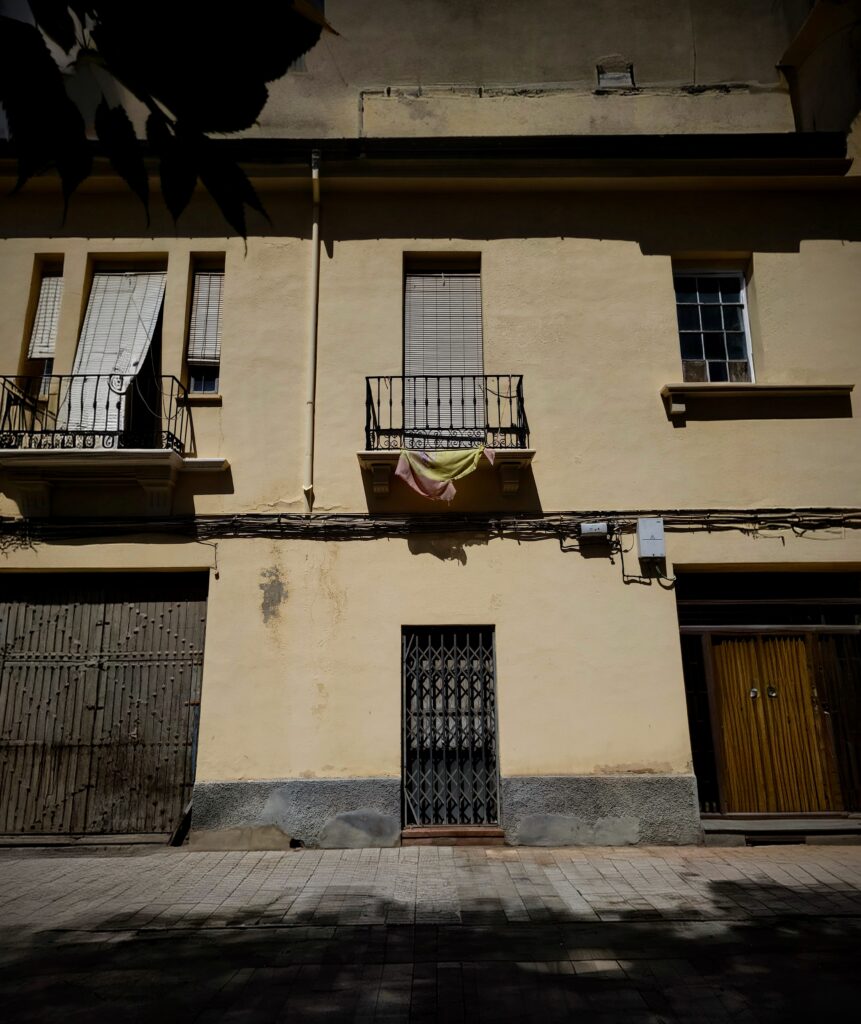
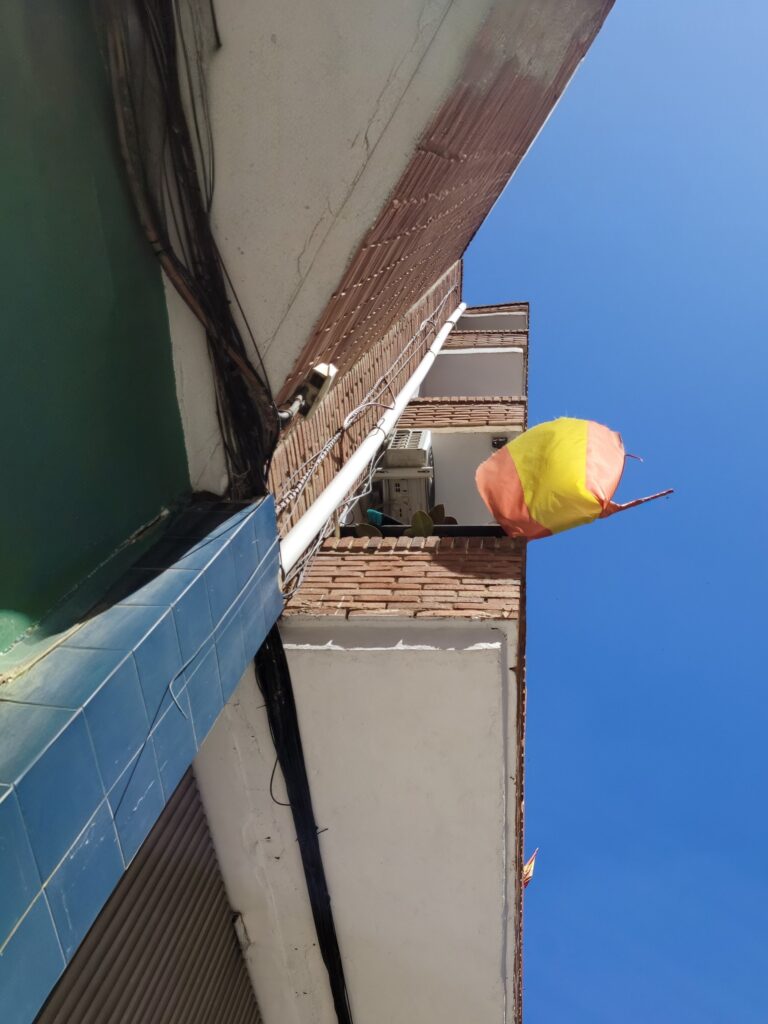
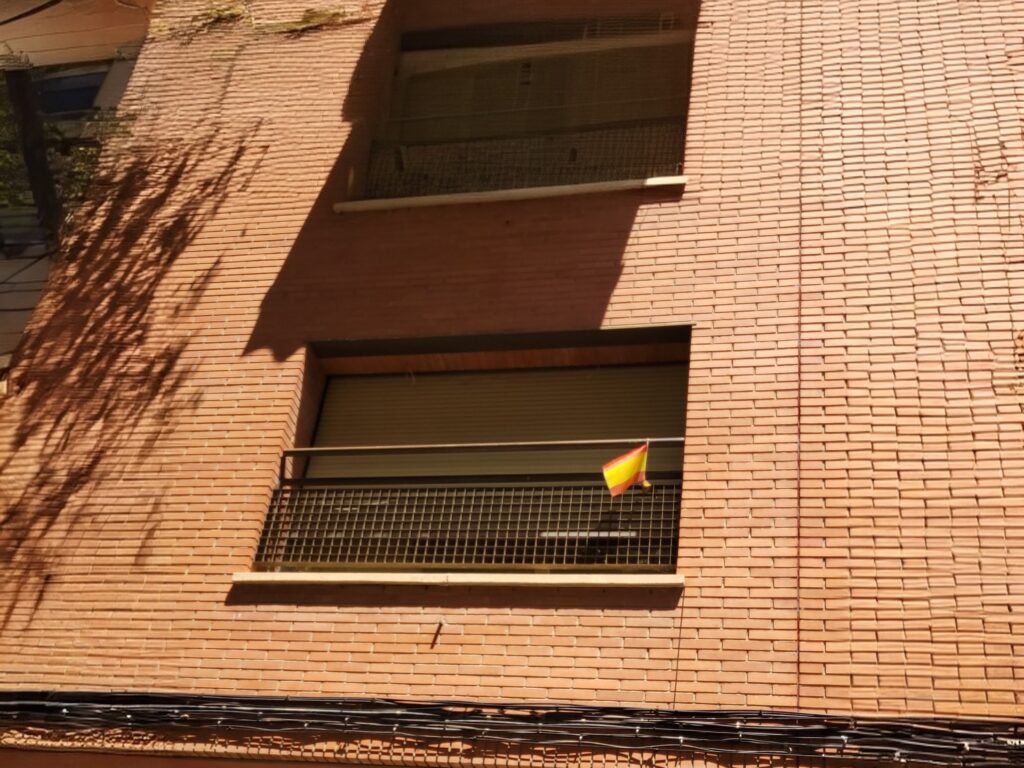
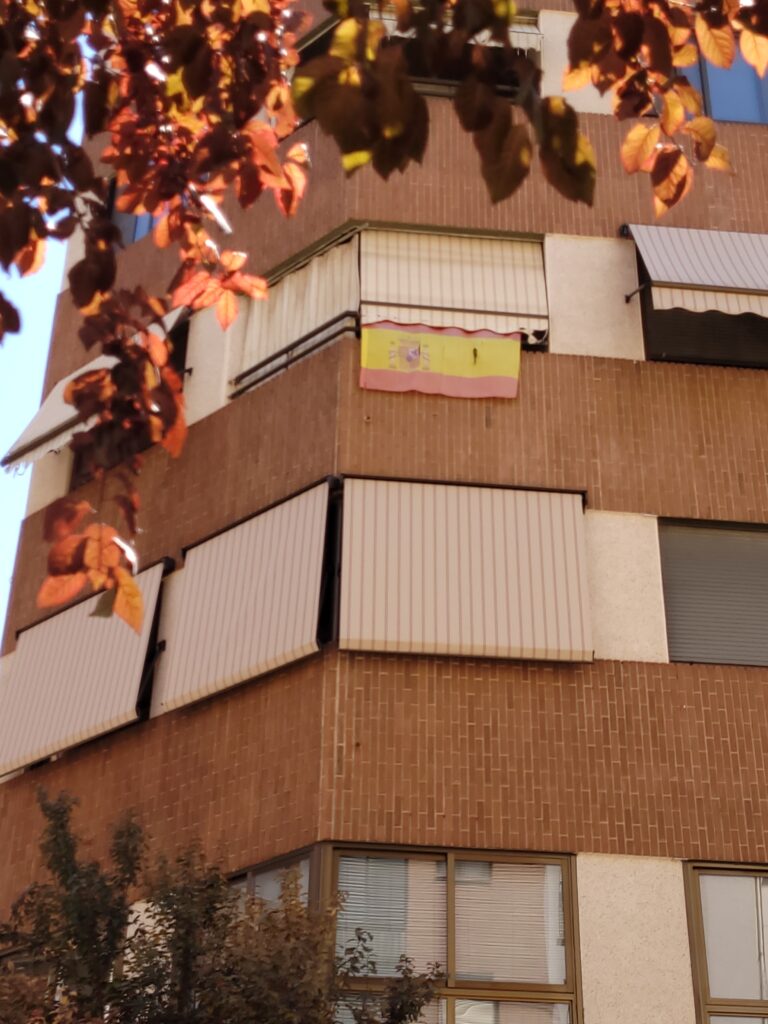
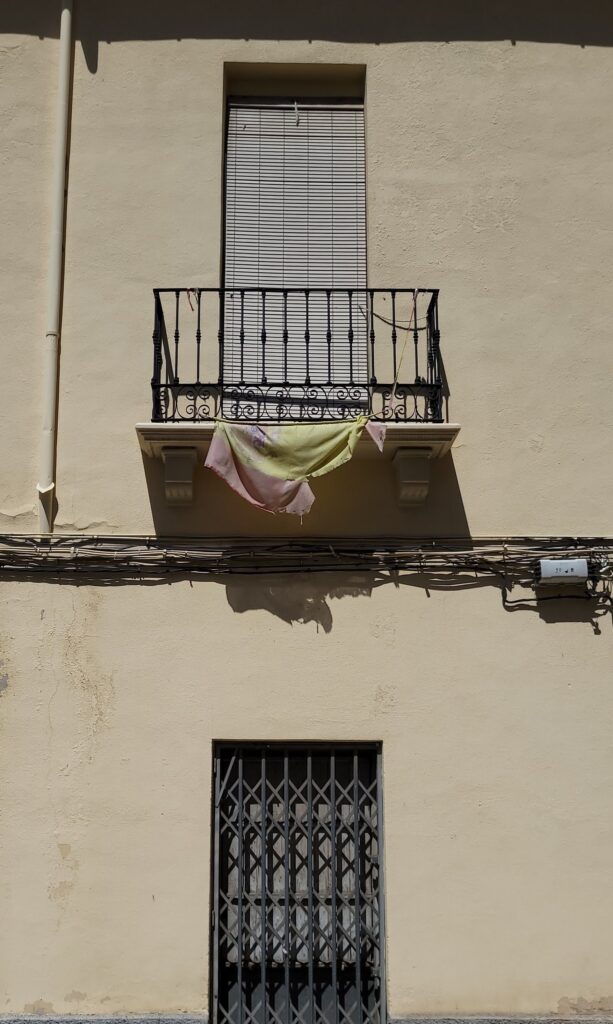
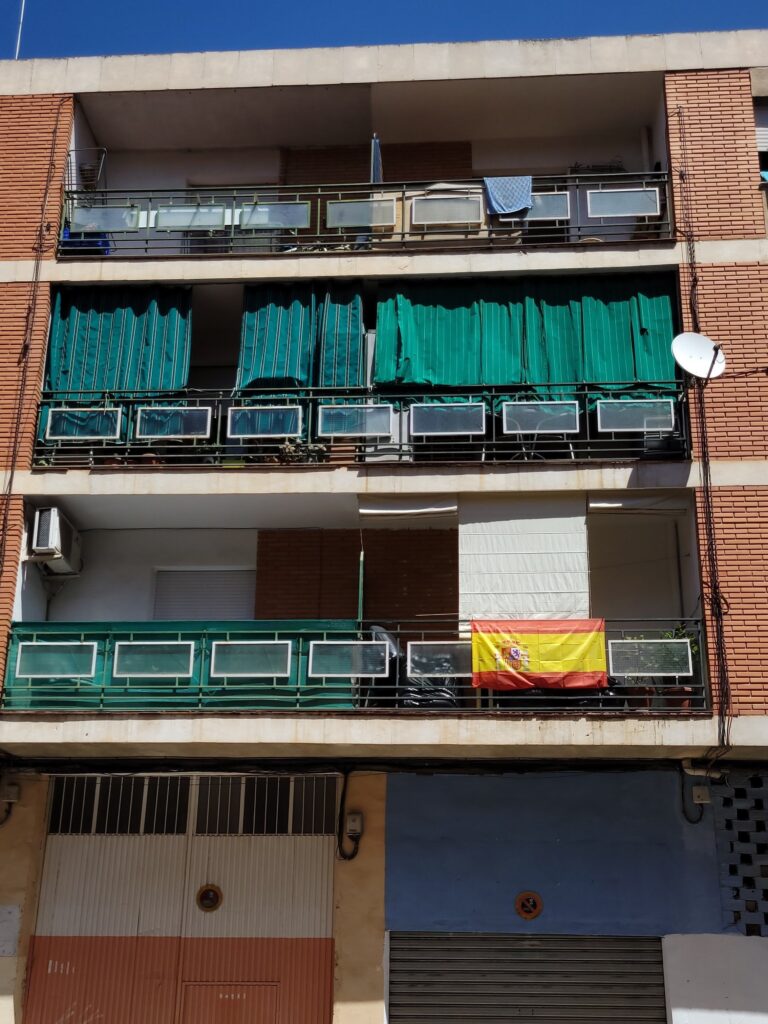
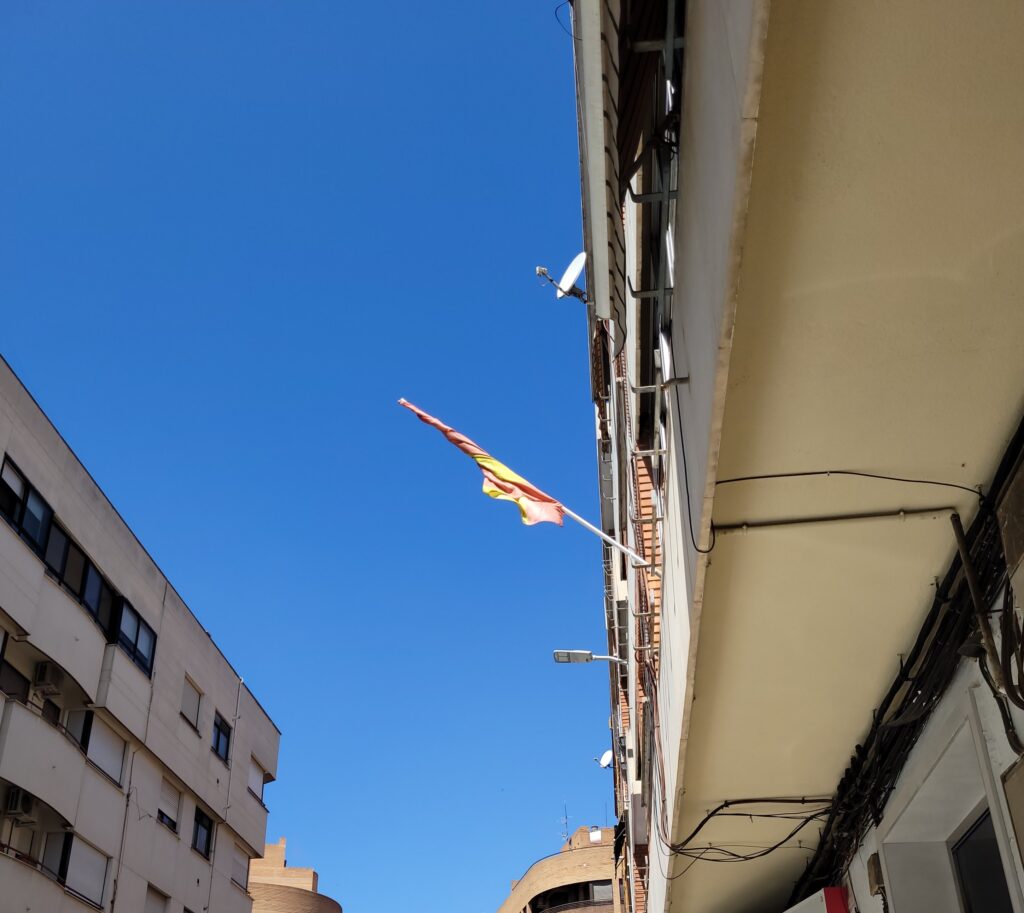
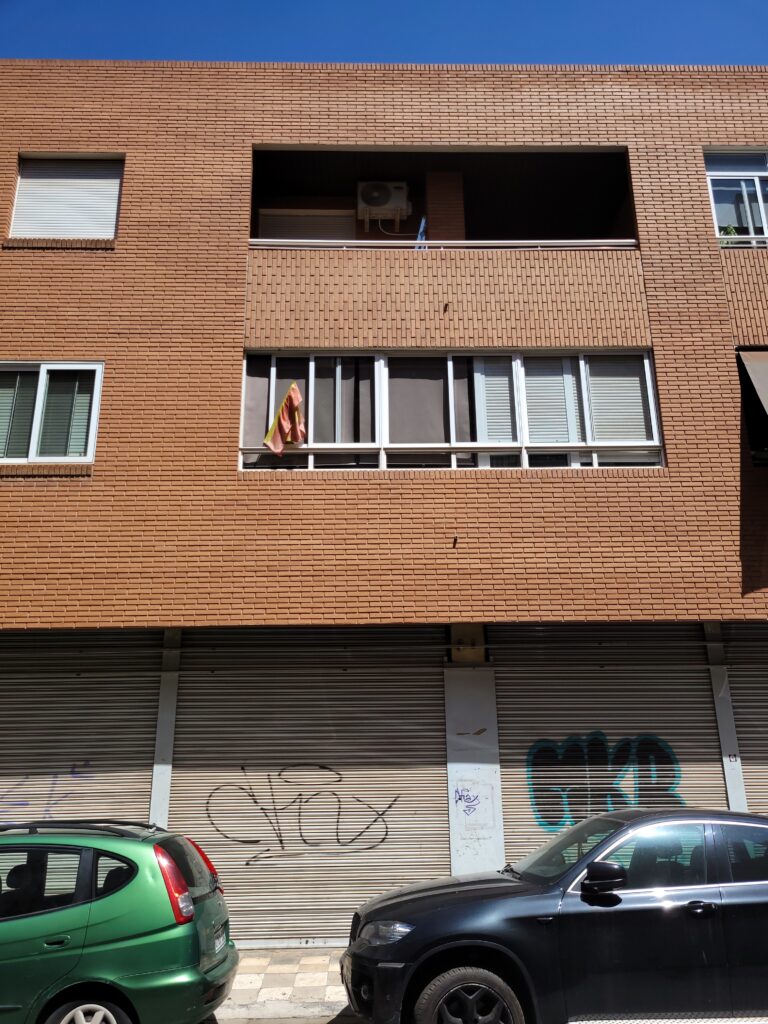
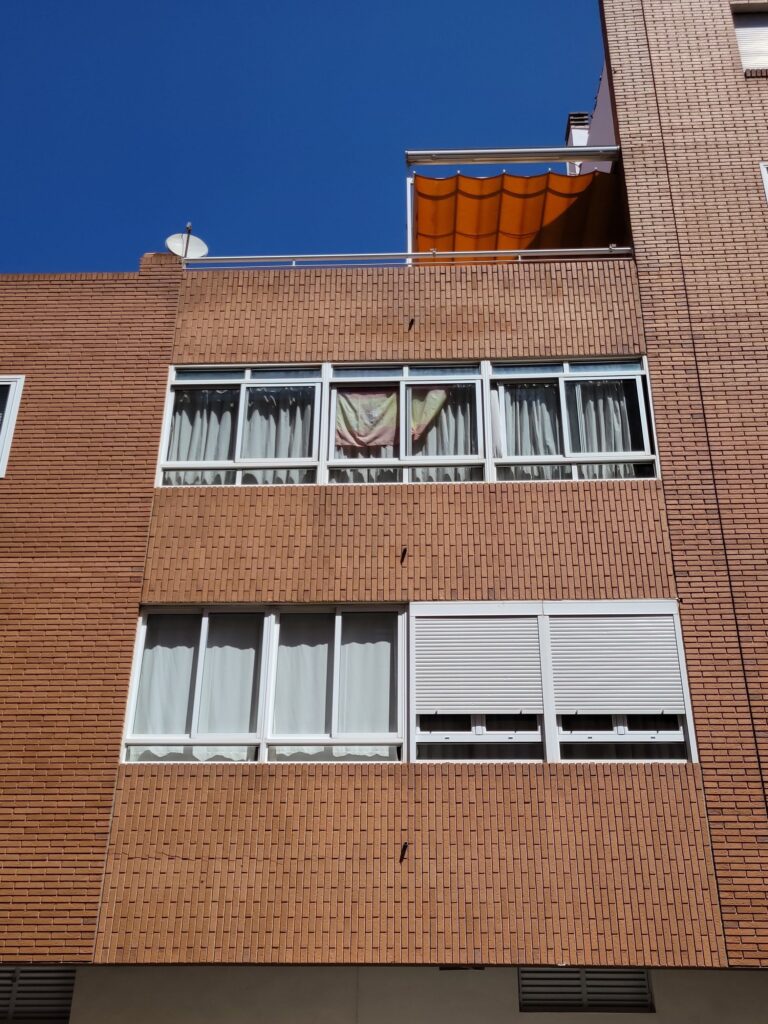
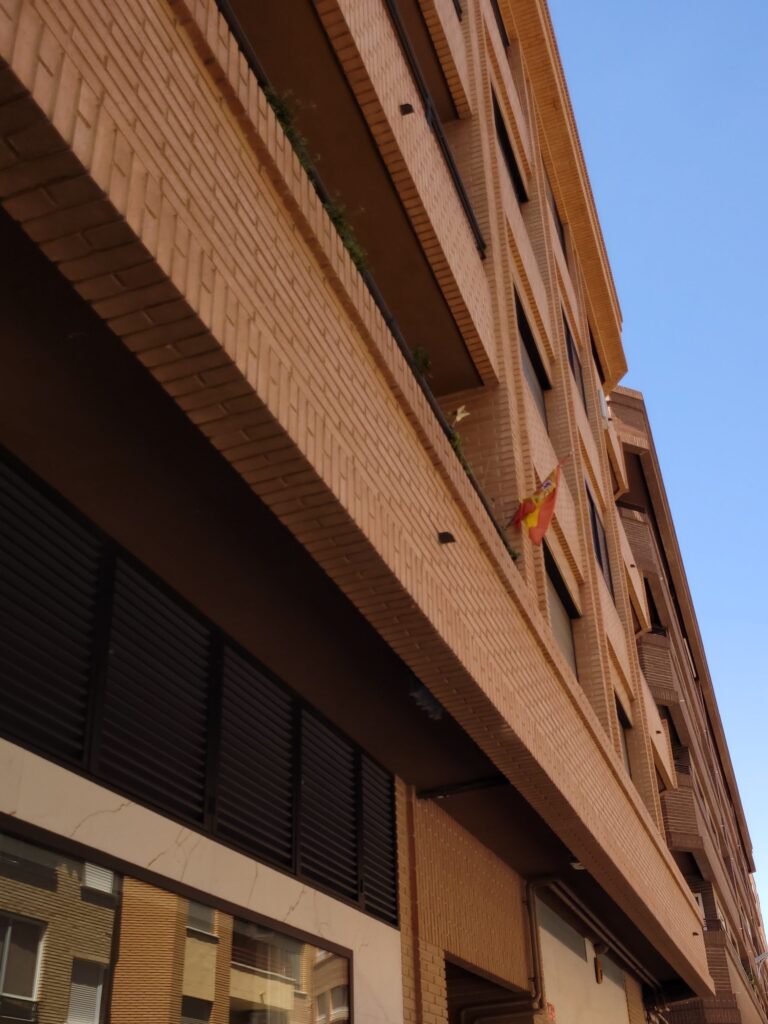
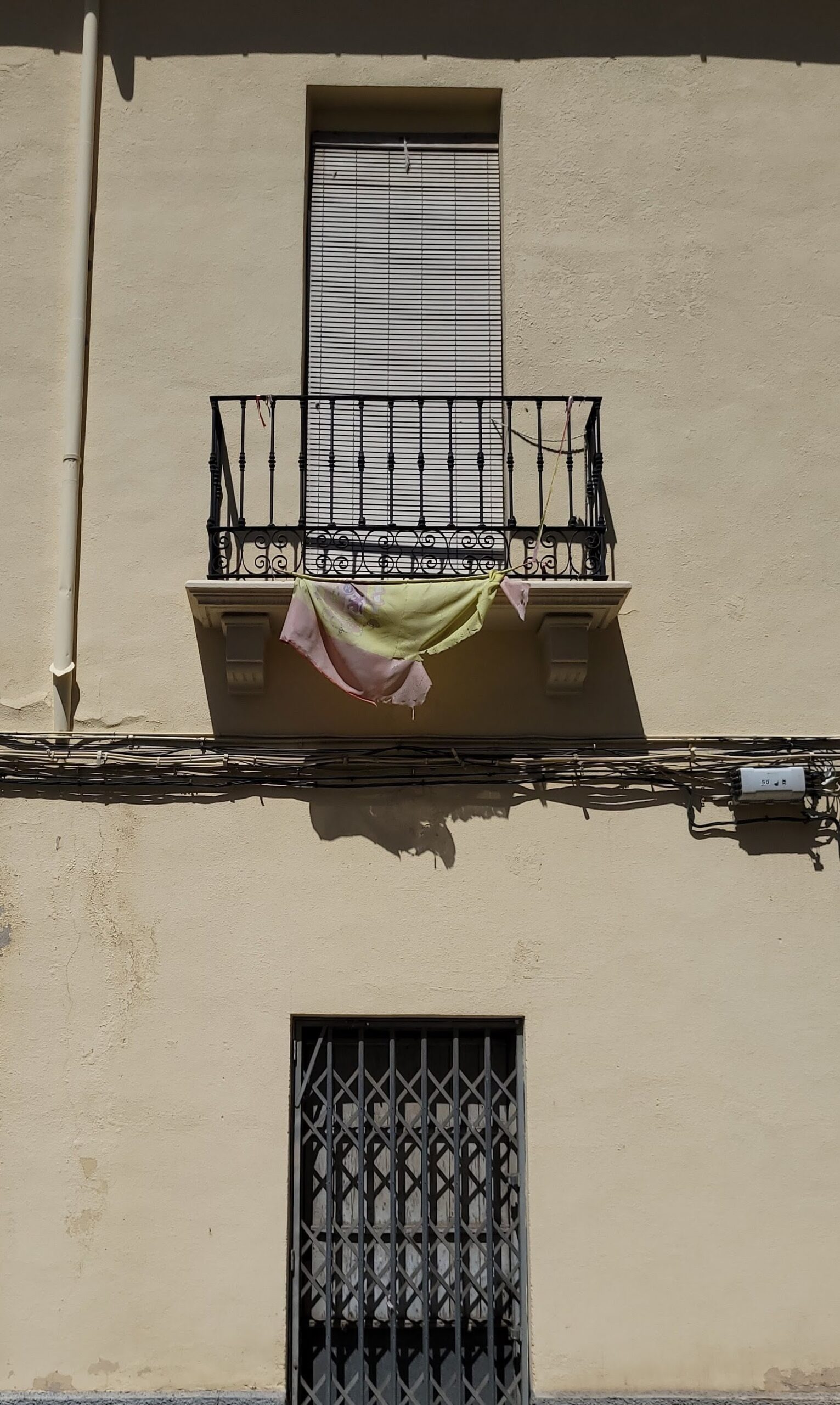
Una, grande y libre by Mayte Olmedilla proposes a visual and symbolic inquiry into the flag as an object of desire, a political sign, and a material residue. Through a series of photographs taken in working-class neighborhoods, the artist captures Spanish flags displayed on domestic balconies, subjected to the wear of time, the elements, the sun, and the wind. These images reveal a national emblem that has lost its original form, exposing in its deterioration the fractures within the narrative of unity it seeks to embody.
Olmedilla approaches the flag not as a fixed symbol but as a mutable body. In its decay, a poetics of contradiction becomes visible: that which was meant to represent permanence and purity appears vulnerable, eroded, twisted. The material unveils a truth concealed by official discourse, the fragility of the national myth. The balcony, the window, emerge here as liminal spaces, thresholds between the intimate and the public, where the act of hanging a flag becomes one of affective and political communication.
At this threshold, Olmedilla questions the force of desire that drives one to display the national symbol: a desire for belonging, for affirmation, perhaps also for confrontation. What is sought to be said through that gesture? To whom is it addressed? What fear or hope sustains it?
Beneath these images pulses a reflection on social class and collective identity. By turning her gaze toward working-class neighborhoods, Olmedilla exposes how everyday nationalism is intertwined with the material conditions of life, with the longings and wounds of a community torn between pride, dispossession, and memory.
Una, grande y libre offers no answers but instead opens a space for critical contemplation. It confronts the viewer with the persistence of symbols and their ability to transform, to endure even as their meaning fractures. Mayte Olmedilla thus invites us to look directly at what we might prefer not to see.
Are these gestures and images a call for attention, born of the growing void in public dialogue, where the human interlocutor seems to have been replaced by the screen?
Or are they the expression of a need for belonging that loses itself in the radicalization and isolation that take root within digital networks?